SNAP Cuts Threaten 2.4 Million Florida Residents

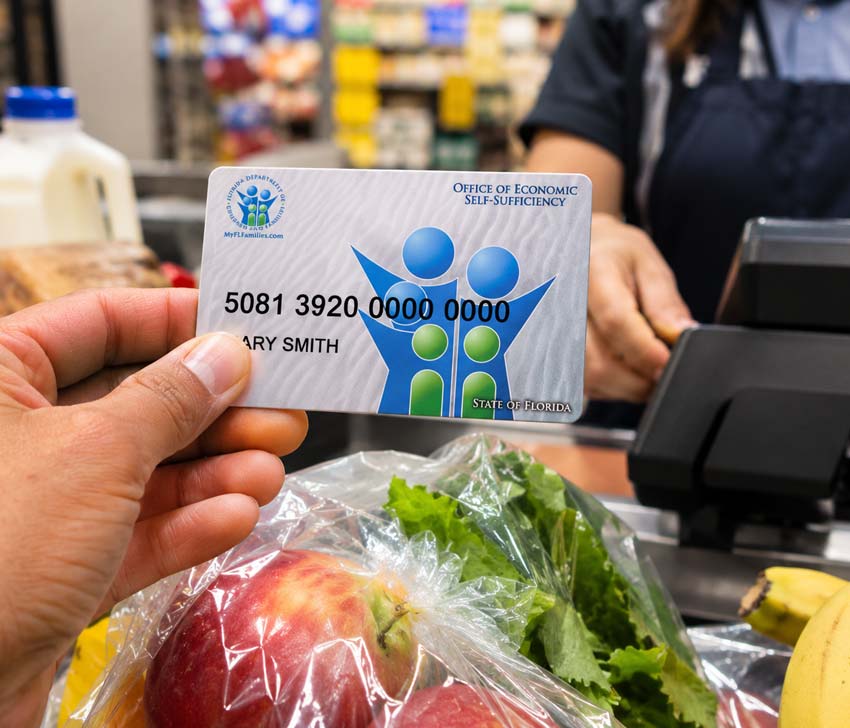
Just days before Thanksgiving, more than 2.4 million Florida residents rely on SNAP food assistance, as federal funding cuts and proposed restrictions raise concerns about the future of these essential benefits.
More than 2.4 million Florida residents depend on the Supplemental Nutrition Assistance Program (SNAP) to put food on their tables, a reality that becomes especially significant during Thanksgiving and Christmas, when many families face additional expenses.
According to a new study by Trace One, based on data from the U.S. Department of Agriculture (USDA) and the U.S. Census Bureau, 2,442,523 Florida residents receive SNAP benefits, representing 10.4% of the state’s population.
The report warns that recent changes to the program and new federal proposals could make it more difficult for millions of Americans to access food assistance.
Federal Cuts and New Restrictions Raise Concerns
Throughout 2026, SNAP has undergone significant changes, including stricter work requirements and reductions in federal funding contributions for certain program costs.
According to Trace One, these changes are part of a broader shift that could particularly affect low-income families, older adults, and individuals who depend on food assistance.
Additionally, the USDA has proposed eliminating certain automatic eligibility pathways connected to the Temporary Assistance for Needy Families (TANF) program.
If finalized, the proposal could remove more than six million Americans from SNAP by 2029, according to estimates cited in the report.
The proposed rule has not yet been finalized and remains under review.
Florida: Millions Depend on Shrinking Food Assistance
The study reveals that SNAP recipients in Florida receive an average of just $177.63 per person each month, while the average monthly benefit per household is $312.86.

These benefits are especially important for families struggling with rising grocery prices and other essential living expenses.
Nationwide, approximately 38 million Americans receive SNAP assistance, compared with 41.7 million during fiscal year 2024.
Thanksgiving Under the Shadow of SNAP Cuts
In Miami-Dade County and communities across South Florida, uncertainty surrounding SNAP comes at a time when many families are seeking additional support to provide meals for their households.
Although the study does not provide specific figures for Miami-Dade, it highlights the significant number of Florida residents who rely on these benefits.
As discussions over additional restrictions continue, millions of households face a critical question: how will they keep food on the table if the assistance they depend on is reduced?