FPL Puts Its Power Grid to the Test Against Lightning

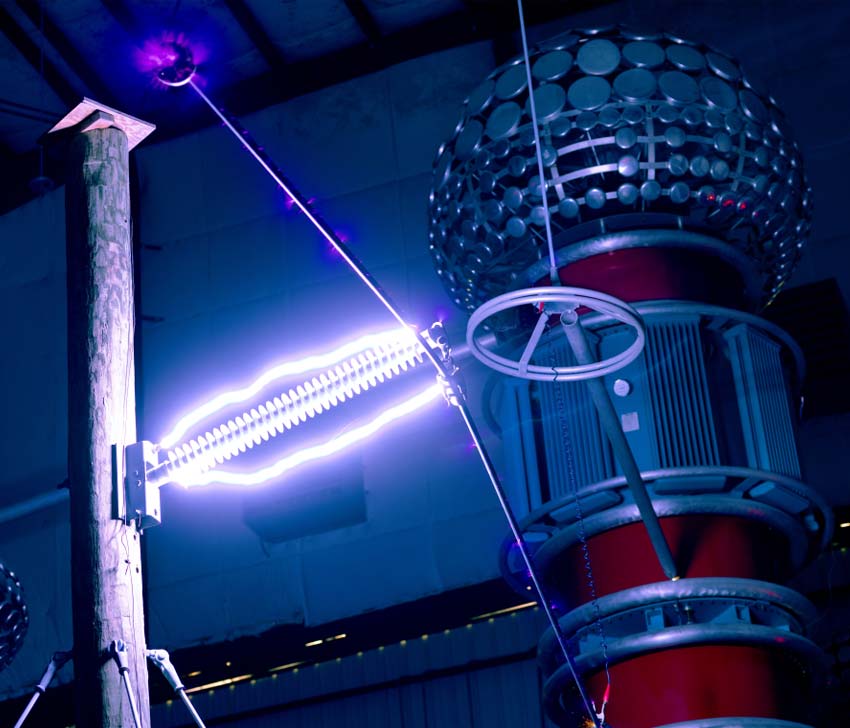
Through simulated lightning strikes and extreme weather conditions, FPL evaluates its equipment to improve electric service reliability and help keep customer costs low.
Living in South Florida means dealing with powerful thunderstorms, high temperatures, humidity, and salty air. These conditions present ongoing challenges for the electrical infrastructure that serves homes and businesses across Miami-Dade, Broward, and other Florida communities.
To address these challenges, Florida Power & Light Company (FPL) conducts specialized testing at its Reliability Assurance Center, where engineers evaluate the strength, safety, and durability of equipment before it is approved for use on the power grid.
Since 2020, the company has conducted approximately 1,300 evaluations, averaging more than 200 tests annually.
A Laboratory That Simulates Lightning
One of the facility’s most notable features is the Lightning Lab, a specialized laboratory designed to reproduce high-voltage conditions similar to those experienced during Florida’s thunderstorms.
These tests help engineers identify potential vulnerabilities and select equipment capable of withstanding severe weather conditions, helping reduce the risk of power outages.
For South Florida families and businesses, having more resilient electrical equipment is particularly important during thunderstorm and hurricane season.
Protection Against Humidity and Salty Air
Proximity to the ocean also presents significant challenges for electrical infrastructure. Approximately 80% of FPL’s service area is located along Florida’s coastline. Using specialized salt fog and ultraviolet light chambers, engineers can simulate the equivalent of two years of coastal weathering in just three months.
They also use electron microscopes, X-ray imaging, and three-dimensional scanning technology to investigate equipment failures and identify potential problems before they occur.
Greater Reliability and Efficiency for Families
Each year, FPL conducts more than 100 evaluations focused on reliability, approximately 100 aimed at improving equipment efficiency and extending its lifespan, and about a dozen specifically dedicated to safety.
Depending on their complexity, these evaluations can take days, weeks, or even months to complete.

According to FPL, its electric service reliability is more than 60% better than the national average, while typical customer bills based on 1,000 kilowatt-hours of electricity consumption are more than 30% below the national average.
By identifying potential equipment issues early, engineers can make more informed decisions about the materials and technologies used throughout the electrical system.
For Miami-Dade and Broward residents, this preventive work helps strengthen electrical infrastructure, reduce the likelihood of power outages, and maintain more reliable service despite South Florida’s demanding weather conditions.
These efforts also support the company’s goal of investing in durable, cost-effective equipment that serves local families and businesses today and in the years ahead.
For more information, visit www.fpl.com.