
Rural Patients Face Lower Access to Sleep Apnea Evaluations

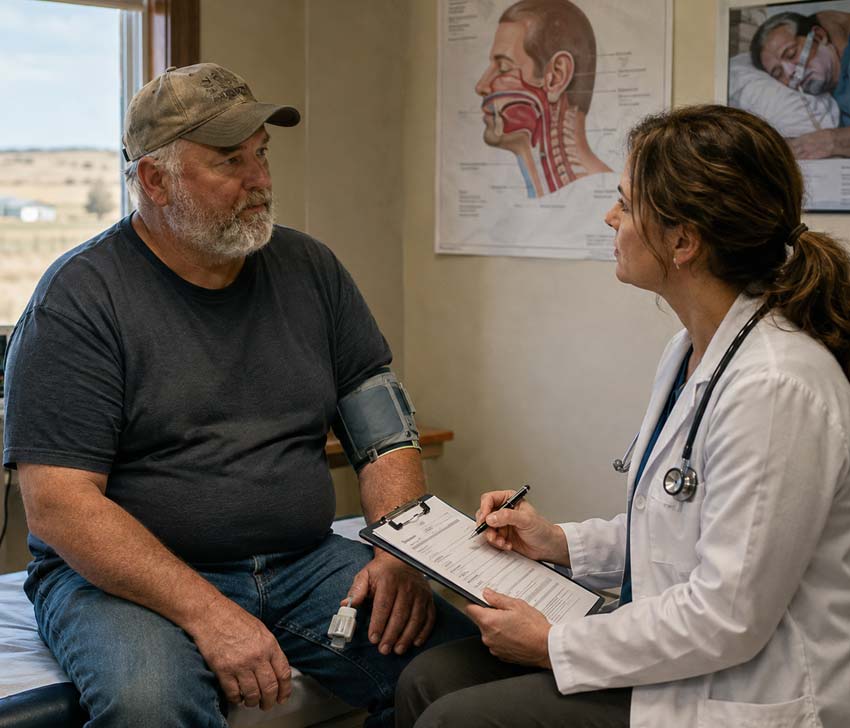
Patients at high risk for obstructive sleep apnea are less likely to be referred for evaluation when they receive primary care in rural communities, according to a new study scheduled for presentation at the SLEEP 2026 annual meeting.
Researchers reviewed the electronic medical records of 25,917 adults treated between 2017 and 2024 within the Cleveland Clinic Health System in Ohio and Florida. Among patients considered at high risk, only 15% of those living in rural areas received a referral for sleep apnea evaluation, compared with 20% of urban patients.
Even after researchers adjusted for age, sex, race, body mass index, insurance coverage, state and neighborhood socioeconomic conditions, rural patients had 25% lower odds of receiving a referral.
“These findings highlight that geographic location is an independent factor in whether high-risk patients are referred for obstructive sleep apnea evaluation in primary care,” said principal investigator Dr. Joscilin Mathew, a sleep medicine fellow at the Cleveland Clinic.
Obstructive sleep apnea occurs when the upper airway repeatedly collapses during sleep, interrupting breathing and reducing sleep quality. An estimated 54 million adults in the United States have sleep apnea, including about 24 million with moderate to severe obstructive sleep apnea.When left untreated, the condition is associated with an increased risk of high blood pressure, heart disease, stroke and type 2 diabetes.
To identify high-risk patients, researchers considered factors such as obesity, related cardiovascular or metabolic conditions, a body mass index above 35 and a STOP Questionnaire score of 2 or higher. The STOP Questionnaire is commonly used to screen for symptoms linked to sleep-disordered breathing.

The study included 3,874 rural patients and 22,043 urban patients. Among those who did receive referrals, rural patients had a higher median body mass index and were more likely to live in communities facing greater socioeconomic disadvantage.
The study’s authors said rural communities may face structural barriers such as a shortage of sleep specialists, longer travel distances and limited access to diagnostic services.Senior author Dr. Cinthya Peña Orbea said primary care-based models for sleep apnea evaluation could offer one way to reduce these disparities and improve access to timely diagnosis.
The research abstract was recently published in an online supplement of the journal Sleep and was presented June 15 in Baltimore during SLEEP 2026, the annual meeting of the Associated Professional Sleep Societies, a joint venture of the American Academy of Sleep Medicine and the Sleep Research Society.