
New Test Could Predict Development in Premature Babies

August 14, 2026
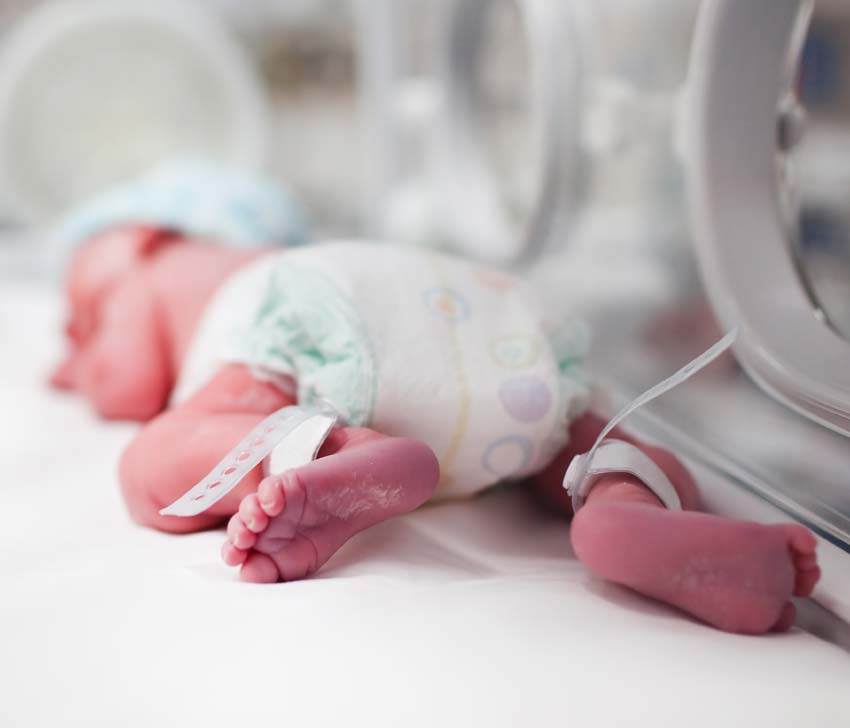
A simple, safe and non-invasive technique that measures how a baby’s brain uses oxygen could help doctors identify premature infants who may need additional developmental support during their first years of life.
Researchers at Université de Montréal and CHU Sainte-Justine studied 241 babies born between 29 and 36 weeks of pregnancy. Using an optical sensor placed on the forehead, scientists measured cerebral blood flow, how much oxygen reached the brain and how efficiently that oxygen was used.
The technology combines two advanced optical methods known as FDNIRS and DCS. It involves no radiation or pain. Measurements were taken when the babies reached term-equivalent age, approximately 40 weeks.
Two years later, researchers evaluated the children’s cognitive, language and motor development using the Bayley-4 scales, a widely used tool for assessing early childhood development.
The findings revealed an important connection: the more efficiently a premature baby’s brain used oxygen, the better the child’s later cognitive and language outcomes.
The discovery could be particularly significant for babies born between 29 and 36 weeks. Although they represent the majority of premature births, they typically receive less specialized follow-up than infants born before 29 weeks.
Among the children studied, approximately one in three showed delays in at least one area of development by age 2. About 29% experienced language delays, while 13% showed cognitive delays.
Researchers also identified differences between boys and girls. Among boys, the relationship between early brain measurements and later development was more pronounced. Boys also recorded significantly lower language and motor development scores, suggesting they may have greater neurological vulnerability.
One of the technology’s biggest advantages is its simplicity. Unlike an MRI, the optical assessment can be performed at the baby’s bedside without sedation or transportation outside the neonatal intensive care unit.The goal is not simply to predict potential developmental difficulties, but to make earlier intervention possible.
When warning signs are identified, specialists such as physical therapists, occupational therapists and, later, speech-language pathologists may be able to provide targeted support during critical stages of childhood development.
Researchers are continuing to follow the children involved in the study and are completing assessments at age 5, before they enter school. Plans are also being developed to examine their progress again at age 8.
The long-term goal is to establish reference values for brain oxygen availability and utilization, potentially allowing medical teams to evaluate these measurements much like traditional childhood growth charts.
A brief bedside measurement could ultimately become an important tool for identifying premature babies who need additional support earlier, giving families and medical teams more time to help children reach their developmental potential.
Tags